You’ve no doubt heard of Henry Higgins and Eliza Doolittle, either from George Bernard Shaw’s classic play Pygmalion or its musical reimagining, My Fair Lady. But how much do you
know of the Eynsford-Hill family? This trio of secondary character s pops up to provide some comic relief, but also shine a light on the main characters and help define them for us.
THE SPOILED GIRL
 “I think Clara is a fabulous character. Sometimes those sort of character roles are especially appealing to me, because they have a lot of places you can take them.”
BoHo’s own Casting Associate, Rebecca Mauldin, plays the spoiled young lady Clara Eynsford-Hill in our joint production of Pygmalion with Stage Left Theatre “She seems to be a very one-dimensional character upon the first read,” she says. “She’s spoiled. She likes things her way. But obviously she’s not one-dimensional, because no one is.
“She has a lot of potential, which Shaw mentions in his epilogue to the play. She’s struggling with a woman’s station in the world. She’s kind of stuck: she’s poor, but she has the training of a lady, and things are changing and her life is different and she doesn’t know how to cope. It kinda sucked to be a lady back then. You didn’t have a lot of options.”
Indeed, Clara is almost a portrait of Eliza in reverse. Over the course of play, Eliza rises in social stature as she sheds her lower-class manners, transforming from the loud flower girl at the beginning of the play to a fine lady at the end. In the process, Eliza finds she has lost her independence. Meanwhile, Clara is part of a family in financial decline, and is embracing the coarse language and manners of the lower-class. Seeking her youthful independence, we see Clara reveling in rudeness and foul language, to the horror of those around her, while Eliza is embracing proper etiquette and speech, to the amazement of others.
As for Clara’s frequent outbursts and generally rebellious nature, Rebecca thinks, “she definitely manipulates her family into doing what she wants. She’s learned that she gets her way by pouting. I do think it’s learned to some degree, you know? You will continue something if it gets a response.”
THE HAPLESS LAD
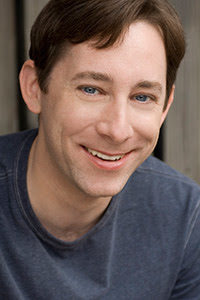 “I love getting to a play a character who communicates as much in his reactions as in his words.”
Meanwhile, Clara’s brother Freddie would seem to be nothing greater than a simple upper-class fool. But his courtship of Eliza, and her willingness to possibly marry him at the end, sets him up as so much more than just a fool. In fact, he functions as a foil for Higgins. In the final act of the play, when Higgins scoffs at the idea of Eliza marrying Freddie, he asks, “Can he MAKE anything of you?” Eliza responds, “Perhaps I could make something of him.” In this scenario, the roles are reversed: Freddie has been showering Eliza with the affections Higgins never has, and gives Eliza the chance to be the supportive teacher and friend that Higgins never was to her.
“I like Freddie because he’s innocent,” says BoHo’s Media Director Charles Riffenburg, who is playing Freddie in our production, “which is not to say he’s unfamiliar with the world. He knows proper manner and etiquette, but he also knows how the world works. And he finds it all amazing.
“For me, that’s the only way to reconcile that fact that Freddie knows full well who Eliza is when he meets her at Mrs. Higgins’ at-home— she’s the strong-spirited flower girl who swiped his cab one rainy night— and he still completely and utterly falls for her. He sends her a flood of letters almost daily. Coming from a family with rapidly dwindling money and social stature, at a time when getting a job would plunge his family into being commoners, chasing after a poor flower girl with no money herself, regardless of how proper she acts, is crazy— but he does it anyway. I think it’s because he’s open to that kind of experience. He knows all the proper rules of Edwardian society, but he refuses to recognize them as a limitation.”
THE CODDLING MOTHER AND THE ABSENT FATHER
 “I think Mrs Eynsford-Hill adores her children, but Clara’s behavior and how it alienates the family is very trying. She was raised to be a lady, but the situation has pushed her off of her comfort level.”
Unfortunately, due to the combining of Clara and her mother into one character in My Fair Lady, Mrs. Eynsford-Hill is often dismissed as an upper-class snob. However, Laura Sturm, who plays Freddie and Clara’s mother, sees the character and her handling of the family from the very different perspective: that of a woman on the edge of crisis.
Whereas Henry’s mother, Mrs. Higgins, has the stature, money, and proper manners to provide her with stability in society (regardless of her son’s boorish disregard for any of the trapping of etiquette), Mrs. Eynsford-Hill is not so lucky. “Honestly, the two children are Mrs. Eynsford-Hill’s lifeline. One of them needs to marry well or she’s going to starve. It sounds sort of silly, that marriage is this life or death thing, but in this time period it’s true. And so when Clara misbehaves in front of a woman who could cut all of us socially, it is terrifying and devastating.”
“In my mind, in the back story I’ve made for the character, there are already people who have cut us socially because we don’t dress as well and we’re not as fashionable as everyone else, and because we can’t reciprocate, we don’t have the means to host parties, so we’re not invited to as many of them anymore. And in my mind, Clara has had her little heart broken by some nasty society witches, which is very upsetting to her mother.”
For our actors, the unexplained absence of Mr. Eynsford-Hill in the play creates a rich opportunity in crafting the history of their family. In order to compose a rich inner life for a character, actors must often invent or infer parts of their history if the script does not provide such information. In this instance, all three actors have decided that the reason Mr. Eynsford-Hill is absent from the play is that he died some years ago. He was the sole source of their money, and it’s been dwindling ever since.
“I did some research on Epsom, which is where Mrs. Eynsford-Hill says she was raised,” Laura reveals, “and it was known for the Epsom Downs Racecourse,” which was (and still is) England’s premier thoroughbred horse race. “It’s my thought that her husband liked to gamble, and that took care of a good amount of the family’s money.”
The loss of Mr. Eynsford-Hill has influenced how Laura approaches playing Mrs. Eynsford-Hill and how she deals with her family. “I think if her husband had stayed alive, and they’d had money, she’d have done a better job raising the two children. She is a fine lady, but she’s on the edge.”
You can see the Eynsford-Hills in action in BoHo and Stage Left Theatres’ joint production of Pygmalion, now playing at Theater Wit until February 10th. Do you have thoughts on the characters or our actors’ approach to them? Leave a comment below and join the conversation!


 Posts
Posts


 When I joined the cast of BoHo Theatre’s The Merchant of Venice in the summer of 2008, I immediately sensed something different about the company. For the first time in Chicago, I had encountered a group of artists who went out of their way to make the rehearsal and artistic process something uniquely special and supportive. I felt like there was true collaboration going on, and that the voices of the cast were valued in the overall process.


